Best AI Automation Consultants in 2026
A 2026 guide to the best AI automation consultants. What a consultant does versus an agency, how to choose, and who fits enterprise, mid-market, and small teams.
Jump to a section
A consultant decides what to automate, in what order, and whether to build, buy, or hire. An agency builds it. Some firms do both. This guide covers the advisory side. If you already know what to build and just want it built, our companion guide to the best AI automation agencies is the better read. Here are the credible consultants, sorted by buyer type.
The best AI automation consultants by buyer type
1. 2V Automation: best for $1M+ operators who want strategy grounded in build capability
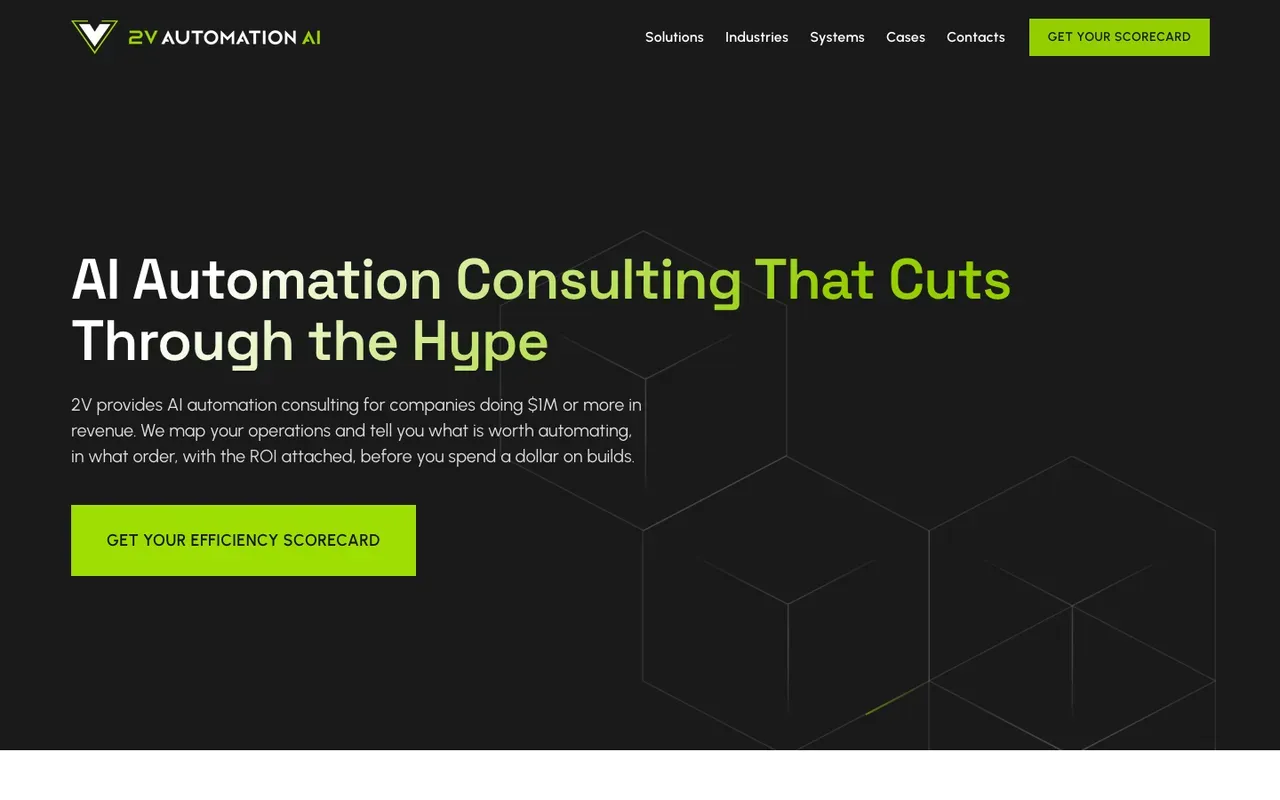
This is us. We consult and build under one roof, which means our recommendations are grounded in what we can ship. We focus on service businesses past $1M in revenue, and we are a certified n8n partner with around 15 years of delivery.
- ICP: Non-technical founders and ops leaders at $1M+ service businesses. We work especially well with teams who know they need a plan but do not have the time, the spec, or the internal automation team to produce it themselves.
- Approach: Discovery is on us. We jump on calls, walk through your tools, sit with your team, ask the questions, and produce the assessment and roadmap from there. You do not need a clean brief or a pre-written process map; that is exactly the work we do.
- Strengths: Translating non-technical operations into a sequenced plan with ROI math per initiative. The end goal we work toward is company-wide automation and AI adoption, not a slide deck. The roadmap is built so we (or someone else) can execute it.
- Watch out for: We are not independent or vendor-neutral. If pure vendor neutrality is what you need, an independent advisor with no build arm fits better. We have flagged that option below.
- Results: Clients who move from consulting into our build engagement typically recover ~518 hours/month across a 6-system backbone within 6 months.
If you want a plan you can act on and the option to have the same team build it, our AI automation consulting page lays out exactly how we work.
2. Independent and fractional consultants: best for vendor-neutral advice
Solo and fractional automation consultants offer the cleanest form of vendor neutrality, since they have nothing to build and nothing to resell.
- ICP: Mid-market and enterprise buyers who specifically want a neutral second opinion and will handle or separately source the build.
- Approach: Engagement-scoped advisory, often part-time or fractional. Output is a written plan or roadmap.
- Strengths: No vendor bias. They can tell you to walk away from an automation project without losing revenue.
- Watch out for: Quality varies more than with firms. Advice that is not grounded in recent build experience can drift from what is actually realistic. Vet hard for recent, hands-on delivery.
3. Enterprise consultancies (Accenture, IBM, Deloitte, Fractal Analytics): best for large-scale transformation

The big consultancies bring governance, change management, and the capacity to run a program across a large organization.
- ICP: Fortune 500 and large-enterprise buyers running multi-year transformation programs with internal governance committees.
- Approach: Program-shaped delivery with named partners, large multi-disciplinary teams, and rigorous process around scope, risk, and stakeholder management.
- Strengths: Capacity and credibility at scale. They can guide a transformation across thousands of staff and survive board scrutiny.
- Watch out for: Priced for that scale. Overkill, at six- or seven-figure tickets, for a mid-market operator who needs a focused 4-week assessment.
4. AutomateNexus and similar boutique advisory-and-build firms: best for small businesses starting out
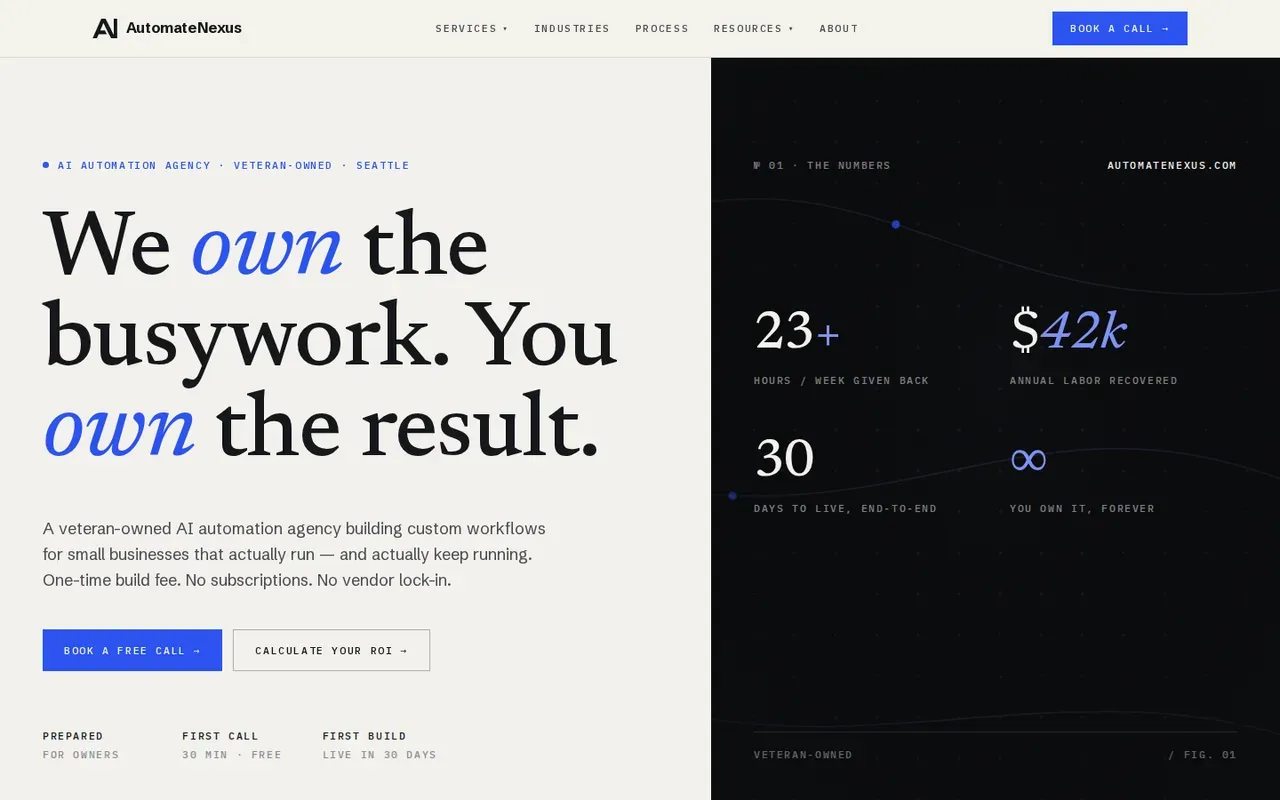
Some smaller firms pair light consulting with implementation for businesses earlier in their automation journey.
- ICP: Small businesses below the $1M band who want light advisory paired with implementation in one engagement.
- Approach: Combined consulting + build, scoped against single workflows or a short engagement.
- Strengths: Accessibility and price point. Reasonable entry for buyers not ready for a mid-market engagement.
- Watch out for: Less of a fit once volume of manual work calls for a connected system rather than isolated automations.
5. Codebridge and architecture-first software firms: best for production AI agents in complex environments
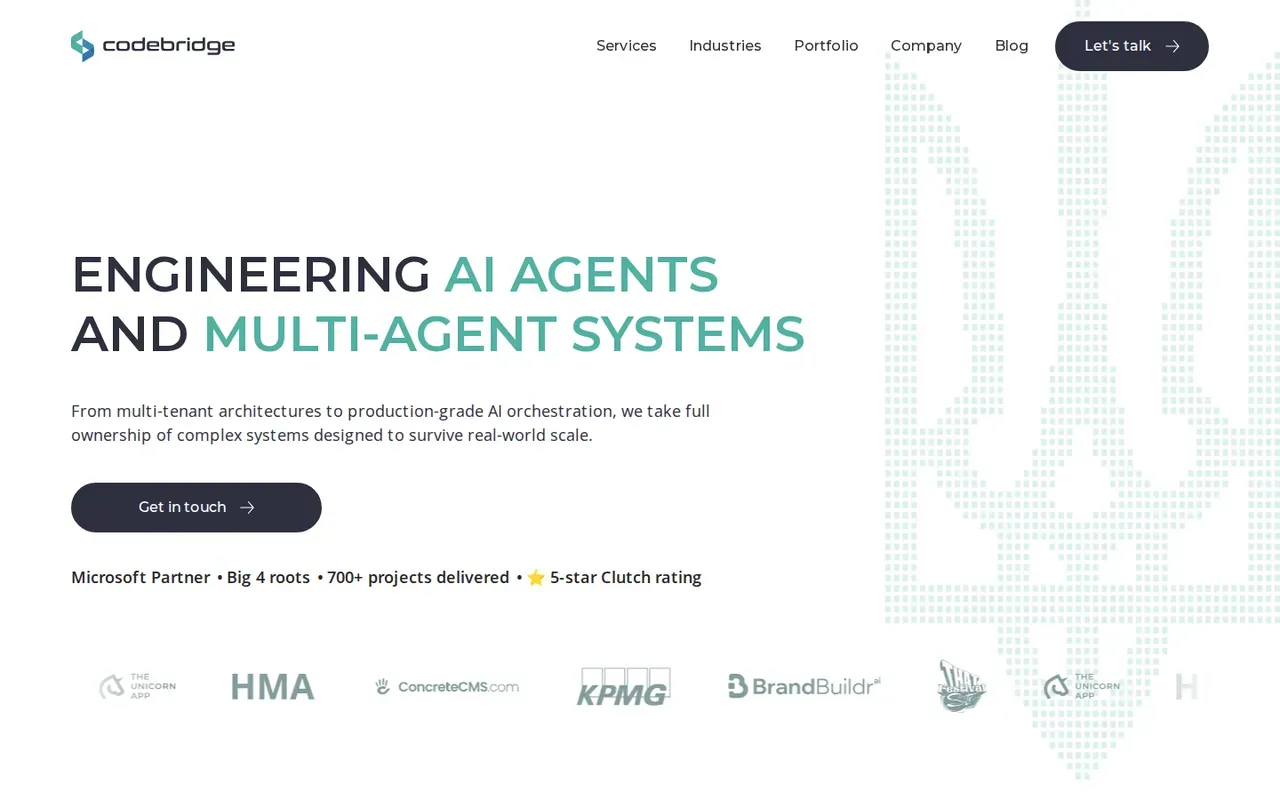
Some software firms approach the consulting question from an architecture-first angle, useful when the real question is how AI agents will integrate across several systems in a regulated or complex software environment.
- ICP: Technical buyers shipping AI agents into existing software, where the consulting question is architectural rather than operational.
- Approach: Architecture-led discovery: system diagrams, integration design, agent runtime choices.
- Strengths: Engineering depth on AI agent architecture, integration design, and production hardening.
- Watch out for: Less of a fit when the real question is “what should we automate first” rather than “how do we wire these agents into our stack”.
How to choose well
- Decide if you need advice or building. If you already know what to build, hire an agency. If you need the plan first, hire a consultant, or a firm that does both and will scope them separately.
- Check for build experience. Advice from someone who has shipped the thing beats advice from someone who has only diagrammed it. Ask what they have built recently.
- Watch for vendor bias. If a consultant only ever recommends the platform they resell, you are getting a sales pitch, not advice.
- Insist on ROI before spend. A real plan attaches expected payback to each initiative and sequences them, so you commit to builds only when the math justifies them.
- Scope advisory and build separately. Even with a firm that does both, the consulting should stand on its own, so you are never paying for a build before the strategy proves it.
The bottom line
The consultant category is immature, so judge by substance, not title. If you want pure vendor-neutral advice and will handle the build elsewhere, an independent consultant fits. If you are a Fortune 500 running a transformation, the big consultancies are built for it. If you are a $1M+ operator who wants a plan you can act on and the option to have the same team build it, that is the gap we built 2V to fill, and we would back ourselves for that buyer.