Quote-to-Cash Automation for Professional Services
For a professional-services firm, cash leaks in the handoffs. A deal closes, and someone rekeys the client into accounting, sets up the project, and tries to remember to invoice the deposit. We connect that chain on the CRM, project, and accounting tools you already run. The handoff becomes a pipeline, with a full audit trail and alerts when a number looks wrong.
Five handoffs, five places to bleed money
One automation layer, every handoff connected
What quote-to-cash looks like in production
Five steps. Each transition runs on its own. Each state change gets logged. You see where every deal sits.
- 1
Step 1. Opportunity
A qualified deal in HubSpot, Salesforce, or Pipedrive moves to quoting. The quote pre-fills with the right price tier, terms, and approval chain.
- 2
Step 2. Quote
A dynamic quote generates in PandaDoc, DocuSign, or your system. Pricing logic, discount caps, and approval gates hold. E-sign routes for you.
- 3
Step 3. Signed deal
Signature syncs the client to QuickBooks or Xero, spins up the project folder, creates the project with the right task template, and sends the kickoff email.
- 4
Step 4. Project setup
Tasks assign by service line. Calendar holds, Slack channel, time-tracking project, and templates set up before kickoff. The PM walks into a staged project.
- 5
Step 5. Invoice and onboarding
The deposit invoice ships from QuickBooks or Xero on the deal's schedule. AR aging tracks payment. The onboarding sequence runs until the project is steady. The loop closes.
What we automate
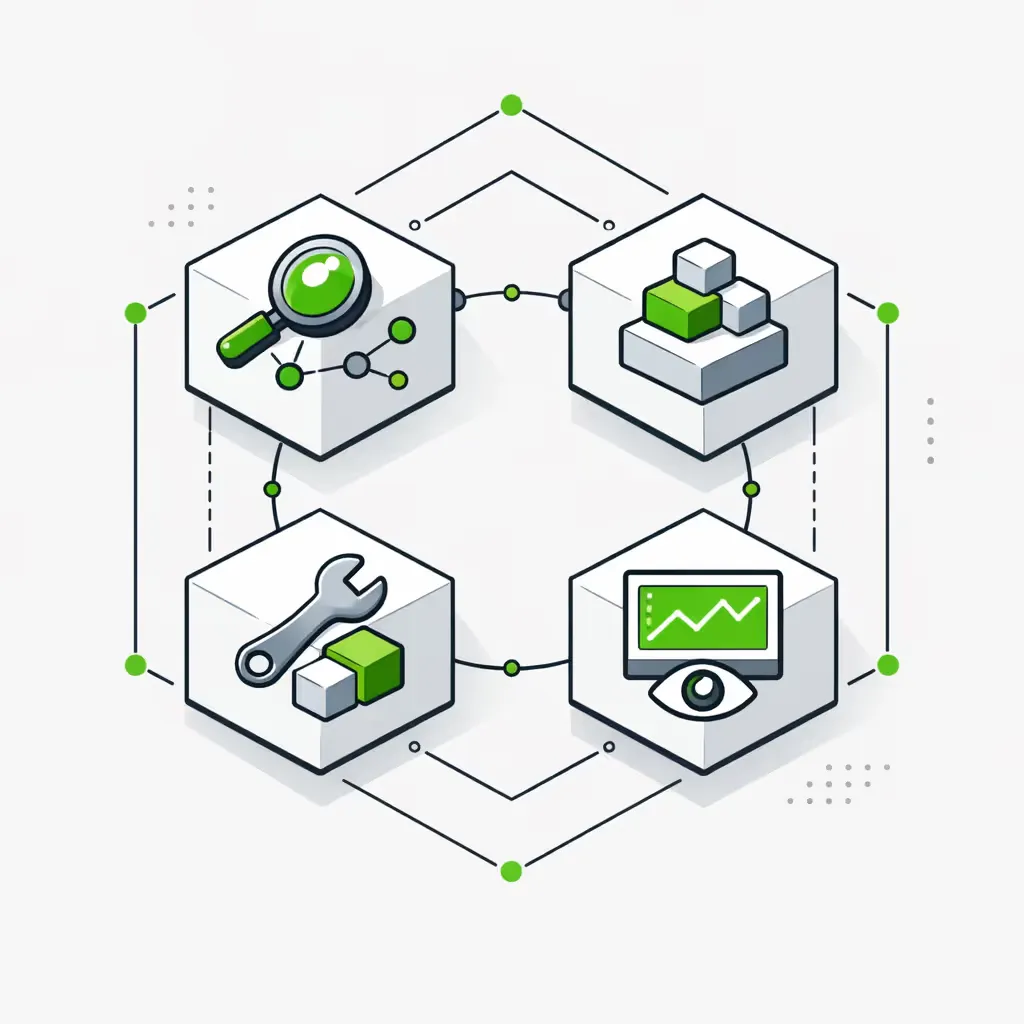
Six modules compose the automation layer. Most clients do two or three of them in the first few months, in roadmap order.
-

Dynamic quote generation
Quotes pre-fill from the CRM with the right price tier, discount logic, and terms. Reps spend minutes, not hours. Approval chains hold when a discount crosses a threshold.
-

E-sign and redlining
PandaDoc, DocuSign, SignWell, or custom. Signature events flow back into the CRM and trigger the next step. Redline rounds get tracked, not lost in email.
-

Signed deal to project setup
ClickUp, Asana, Monday, or Notion projects spin up from the deal with the right task template, deadlines, and owners. Service-line logic picks the template; deal data fills the fields.
-
Folder and task templating
Drive or SharePoint folders, Slack channels, calendar holds, and time-tracking projects set up so the PM walks into a staged workspace, not an empty one.
-

Kickoff email and handoff
The onboarding email ships from the right rep with the right context and access. A handoff brief builds for the delivery team with every relevant deal detail.
-
Invoice generation and AR follow-up
Deposit, milestone, and final invoices generate in QuickBooks, Xero, or Stripe on the deal's schedule. AR aging shows open balances. Follow-up runs on its own.
How it worked for Fire Plan Strategies
 Facility Services - Fire Safety Compliance
 How Fire Plan Strategies Eliminated 230 Manual Hours a Month
Lead intake, quotes, invoicing and certificates, automated
- ~230 hrs / monthManual ops time eliminated
- 14 days → 2 daysTime-to-payment
"This is music to my ears. Our accountant is definitely going to love this because she's not going to have to do invoices anymore. The admin staff is also going to love it because they're not going to have to manually do each one of those certificates."
 Mariano VelazcoManaging Partner
 Where it slots into your stack
We work native-first with the tools you already run. For a services firm, the time tracker matters: it feeds billable time and utilization.
137 toolsWe use in production automation infrastructures
CRM
QUOTING / PROPOSALS
PROJECT MANAGEMENT
ACCOUNTING & BILLING
TIME TRACKING
STORAGE & COMMS
CUSTOM BUILDS
Why 2V
Why our quote-to-cash is different
Native-first, no middleware tax
We use each tool's own API and webhooks. We add middleware only when there is no other way, and we tell you when we do. No proprietary glue you are stuck paying for forever.
Your stack, not ours
The automation layer runs on what you already pay for. We do not resell a platform. HubSpot, Salesforce, ClickUp, Asana, QuickBooks, Xero: pick yours, we have integrated all of them.
Full audit trail
Every quote edit and invoice send is logged with a timestamp and an actor. Who approved that discount is one query away, not a Slack archaeology dig.
Margin-aware
Quote-to-cash without margin visibility is half a system. We instrument the pipeline so utilization and project margin show per deal, not just at month-end.
The automation layer
Built for billable-hours firms
A professional-services firm runs on utilization and project margin. We connect your PSA or time tracker so those numbers are live, not a month-end scramble. The reporting layer sits in our operations dashboard system. The invoice and AR side lives in invoice and AR automation, and the proposal side is part of this same flow.
Quote-to-Cash Module
The complete handoff layer connecting CRM, quoting tool, project tool, and accounting:
Quote Engine
Dynamic quote generation with SKU logic, discount caps, approval gates, and term enforcement. Reps spend minutes, not hours; finance gets clean data.
E-sign Integration
PandaDoc, DocuSign, SignWell, or custom. Signature events flow back into the CRM and trigger downstream cascades on their own.
Project Auto-Setup
Signed deal spins up the project in ClickUp, Asana, Monday, or Notion with the right task template, owners, and deadlines for the service line.
Onboarding Trigger
Kickoff email, calendar holds, Slack channel, document folder, and access provisioning fire in parallel. The PM walks into a fully-staged project.
Invoice Pipeline
Deposit, milestone, and final invoices generate in QuickBooks or Xero on the deal's schedule. No more 'did anyone invoice the deposit'.
AR Follow-up
Aging dashboards plus well-paced follow-up sequences that close the cash loop without sounding like a collections agency.
Margin Reporting
Live dashboards that pull from CRM, time tracking, and accounting to show project margin, utilization, and forecast in real time. See our operations dashboard system for the full reporting layer.
Renewal and Expansion
Project signals (milestone completion, satisfaction, scope expansion requests) flow back into the CRM so renewals do not depend on a rep remembering. The loop closes from cash back to opportunity.
Engagement and pricing
We start with a discovery week, then build the automation layer one project at a time. Once a build is live it runs without us. If you want us to keep improving it, we agree that separately. Each phase delivers measurable value before you commit to the next.
If we cannot show ROI inside six months, we do not take the project.
Automation Discovery Week
Builds
Ongoing
Quote-to-Cash FAQs
If you have a question, chances are you'll find the answer below.
Do you replace our CRM, or work with it?
We work with it. CRM swaps are costly and rarely the real fix. The real problem is that your CRM does not talk to the rest of your stack. We fix the talking part. If you truly need a new CRM, we say so, but in most cases you do not. See the sales automation pillar for the broader CRM context.
Can you connect HubSpot and QuickBooks without Zapier?
Yes. We use native API and webhook integrations, often built on n8n or a service we host. The connection runs in production and dodges Zapier's per-task pricing.
Do we need a PSA or CPQ tool?
It depends on your pricing. Catalog pricing with light discounts runs well on a custom quote engine plus your CRM. Multi-tier pricing, configurable scope, and approval chains earn a real CPQ or PSA tool. We tell you which side you are on.
How does it handle billable hours and utilization?
We connect your time tracker and project tool. Billable time, utilization, and effective rate become visible per project and per person, not just at month-end. The full reporting layer lives in our operations dashboard system.
How is this different from an ERP rollout?
An ERP rollout replaces your stack, takes 9 to 18 months, and costs six figures up front. Our automation layer connects the stack you have, takes three to six weeks for the first build, and pays back inside six months. Run the math with our ROI calculator before you commit either way.
Can we keep our existing quote templates?
Yes, and we recommend it. We rebuild the data flow behind the template: where fields come from, how approval works, what fires on signature. Your reps keep the templates they know.
Where does PandaDoc end and this begin?
PandaDoc is great at the document UX and e-sign UX. It's weaker at CRM-driven data binding, conditional section logic across service lines, and orchestrating the signed-to-project handoff. We often run the automation layer in front of PandaDoc - generation happens in our system, then routes to PandaDoc for the e-sign UX. You keep what PandaDoc is good at; the automation layer handles the rest. More on sales-side automation here.
How does e-signature work?
The automation layer routes generated proposals to your e-sign provider (DocuSign, PandaDoc, SignWell, Adobe Sign, Dropbox Sign) with signature blocks, expiration dates, and reminder cadence pre-configured. Status syncs back to the CRM in real time. Counter-signature and redlining flows are handled natively in the e-sign tool.
Start with an Automation Discovery Week
The Automation Discovery Week maps where your quote-to-cash pipeline leaks time and revenue, and which handoff to fix first. Run the math with our ROI calculator first. For the CRM context, see sales automation; for the accounting side, see finance automation. For the vertical view, see our professional services build.