Lead Generation Automation
We build the system that finds your next customer at the moment they need you. Signal-based sourcing, verified decision-makers, and outreach that runs on its own. Keyed on the signals in your market, built on your stack, owned by your team.
Stale lists, sold to you and four competitors.
A machine that watches for the moment someone needs you.
Why a signal beats a list
Timing is the whole game
A lead is only worth something inside the window where the buyer actually has the problem. A signal is a dated event, so you reach out inside that window instead of hoping. A list has no timing at all, which is why it converts like a lottery ticket.
A reason to call, on every lead
The difference between spam and a welcome call is whether you know why you are calling. When the lead arrives with the event attached, the first line of the email writes itself and the prospect recognizes it as relevant.
Built around your signals
The events that predict demand in your market are not the ones that predict it in someone else's. A custom build keys on yours, runs on your infrastructure, and is documented and handed to your team. Where a ready-made product already fits your industry, we will tell you to buy that instead.
It compounds
Every signal source we add widens the top of your funnel permanently. A list is consumed once. A system keeps producing, and gets more accurate as you feed outcomes back into it.
How we build your lead generation system
The same four steps whatever you sell. The work is in getting the signal right, because everything downstream depends on it.
- 1
Step 1. Find the signal
We work out which public, dated events mean somebody needs what you sell. Permits, violations, filings, ownership changes, funding rounds, job postings, licence registrations, new locations, tech changes. Most industries have several, and almost nobody is watching them.
- 2
Step 2. Source it continuously
We wire the sources into a pipeline that runs every day: open data portals, registries, APIs, and the places where the event first becomes public. Not a one-off scrape. A feed that keeps producing after we leave.
- 3
Step 3. Match the signal to the account and verify the human
A signal is an event, but you sell to a company and you talk to a person. We resolve the event to the account behind it, then enrich and verify the decision-maker so your reps are not guessing at an inbox.
- 4
Step 4. Route, sequence, and measure
The lead lands in your CRM with the signal attached, routed to the right owner, into a sequence that references the actual event. Then we measure which signals convert and drop the ones that do not.
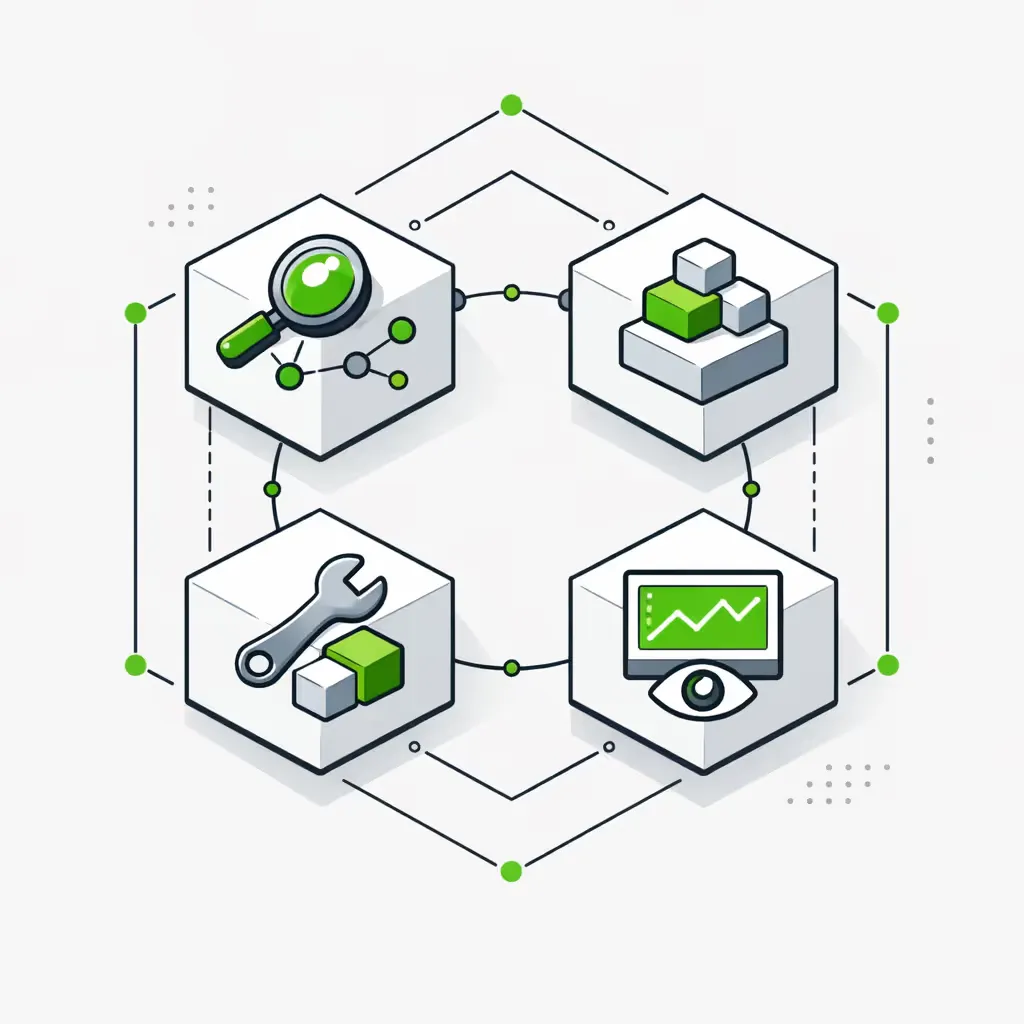
What we automate in your pipeline
Built as one connected system, not six disconnected tools with a person copying between them.
-

Signal sourcing
Continuous monitoring of the public records, registries, and APIs where buying intent first shows up. The feed that everything else runs on.
-

Enrichment and verification
Resolve the event to the account, find the decision-maker, and verify the contact details before a rep ever sees it. Bad data never reaches your sequence.
-

Scoring and routing
Rank leads by the signals that actually close, then route each one to the right owner automatically, with the reason to call attached.
-

Outreach sequencing
Cold outreach automation that references the real event, not a merge field. Personalized from the signal, sent on the cadence you set.
-

CRM sync
Everything written back to the CRM you already run, so the pipeline is visible where your team works instead of in a spreadsheet nobody opens.
-

Pipeline reporting
Which signals produce meetings, which produce revenue, and what a lead actually costs you. The loop that makes the system smarter each quarter.
We built one for ourselves first
-
FIELDCLIENTS, OUR OWN PRODUCT
FieldClients is a signal-based lead sourcing product we built and run ourselves, aimed at field service companies. It is the same machine described on this page, productized for one industry. You can read how the signal pipeline works end to end. If you are a field service company, you can buy a seat rather than fund a build. -
THE SIGNAL
Public, dated events from municipal records: a filed permit, an open violation, a change of managing agent, a new business registration. Each one is a documented reason that somebody needs a contractor right now. What is actually published differs by jurisdiction, so we maintain a public breakdown of building permit data by state. -
THE MATCH
The event is resolved to the account behind it, the management company or owner rather than a homeowner, and the decision-maker is verified. An account is worth years of work. A one-off job is worth one invoice. -
THE SAME PATTERN, ANY INDUSTRY
The signals change and the machine does not. Funding rounds, job postings, licence renewals, regulatory filings, ownership changes, new locations, tech-stack moves. If your buyer announces the problem in public, we can build the system that catches it.
Frequently asked questions
Is this a lead list or a lead generation service?
It is a system we build for you: the workflows run on your infrastructure and your team owns them. That is the right answer when your market needs its own signals wired up. If a ready-made product already covers your industry, buying that is cheaper and faster, and we will say so. For field service companies, that product is FieldClients, which we built and run ourselves.
Should we just buy leads instead?
Sometimes, yes. A signal-based lead that arrives the week the event happened and is routed only to you is worth paying for. What is not worth paying for is a list scraped months ago and resold to your competitors. If you are in field service, FieldClients already does the first thing for your industry. If you sell something else, there is usually no product watching your signals, which is when building one makes sense.
What is a signal, exactly?
A public, dated event that means a company is in the market. A permit filing, a violation, an ownership change, a funding round, a job posting, a new location, a licence renewal. The event gives you both the timing and the reason to reach out, which is what a scraped list can never give you.
Does this work outside field service?
Yes. FieldClients is the version we productized for field service because that is where we started, but the pattern is industry-agnostic. The first thing we do in any engagement is work out which public events predict demand in your market.
What if there is no useful public signal for our market?
Then we tell you, and we do not take the project on that basis. Some markets have no reliable public event to key on. We would rather find that out in the first conversation than build you a machine with nothing to feed it.
Do you write the outreach too?
We build the sequencing and the personalization that pulls the signal into the message. Your team owns the offer and the voice. The system makes sure every send references a real, dated event rather than a generic merge field.
What does it run on?
Your stack. We build on n8n as the orchestration layer, connect the CRM and tools you already run, and write custom services where an API does not exist. As a certified n8n Expert Partner we self-host it on your infrastructure, so your pipeline data stays yours.
How is this different from an AI SDR tool?
An AI SDR writes and sends the emails. This decides who is worth emailing and why. The hard part of outbound is not drafting the message, it is knowing which 40 accounts out of 40,000 have a problem this week. The two work well together: the signal picks the target, the sequencing handles the send.
How long does it take?
The first working signal source is usually live in weeks, not quarters, because we start with one signal that matters rather than boiling the ocean. We add sources after the first one is producing meetings.
Start with an Automation Discovery Week
One week, from $2,000. It maps where your pipeline leaks time and whether a signal-based system would pay back in your market. Whether we work together or not.