Best AI Automation Agencies in 2026
A 2026 comparison of the best AI automation agencies, sorted by buyer type.
Jump to a section
The AI automation agency market exploded from a couple thousand firms to well over ten thousand in two years, and most of the new ones have only a handful of finished projects behind them. The useful question is not “who is best,” it is “who is best for a company like mine.” Here are the credible options, sorted by buyer type.
The best AI automation agencies by buyer type
1. 2V Automation: best for $1M+ ops-heavy companies that want an ongoing partner
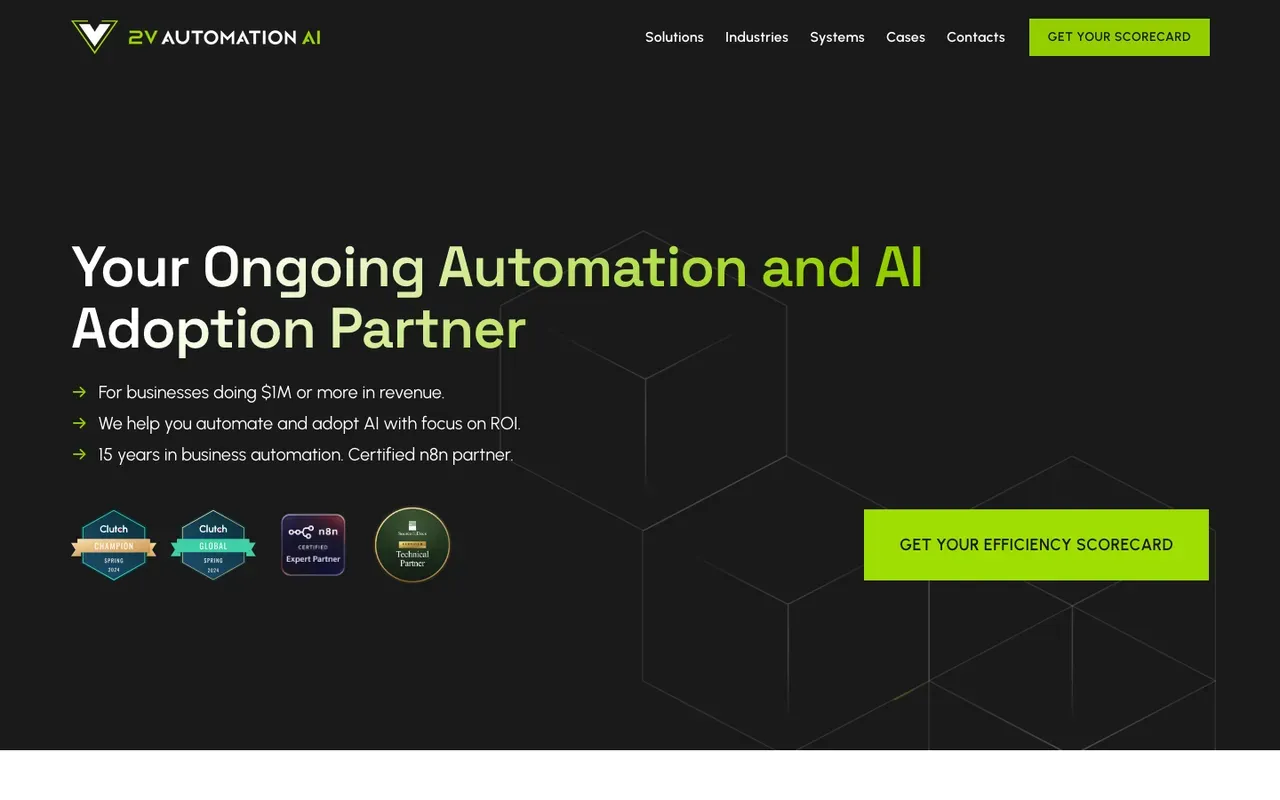
This is us. Across a typical backbone our clients recover around 518 hours a month. We are a certified n8n partner with around 15 years of delivery, and we build a connected automation backbone rather than one-off workflows.
- ICP: Non-technical founders and ops leaders at $1M+ service businesses. We work especially well with teams who know automation matters but do not have a CTO, an internal automation team, or a clean specification ready.
- Approach: We do the discovery ourselves. We do not ask you to write a brief. We jump on calls, walk through your tools, sit with your team, ask the questions a consultant should ask, and produce the spec from there. The first project is usually a single high-ROI system; from there we layer the rest of the backbone.
- Strengths: Process discovery and translation. Turning “we hate doing X every Monday” into a documented, working system. Ongoing partnership: we stay on to run, monitor, and extend what we ship. The end goal we work toward is company-wide automation and AI adoption, not a folder of one-off scripts.
- Watch out for: If you want a $5k single workflow and never speak to us again, we are not the fit. We are also not a Fortune 500 transformation program. We sit in the middle, built for operators who need real systems and someone to own them long term.
- Results: Sales ops hours down 80%, manual support work down 96%, time per client communication down 89% across a typical 6-system backbone.
If that sounds like the fit, our automation agency page lays out exactly what we ship, and our case studies show the numbers per engagement.
2. Markovate: best for funded startups and brands building custom AI products
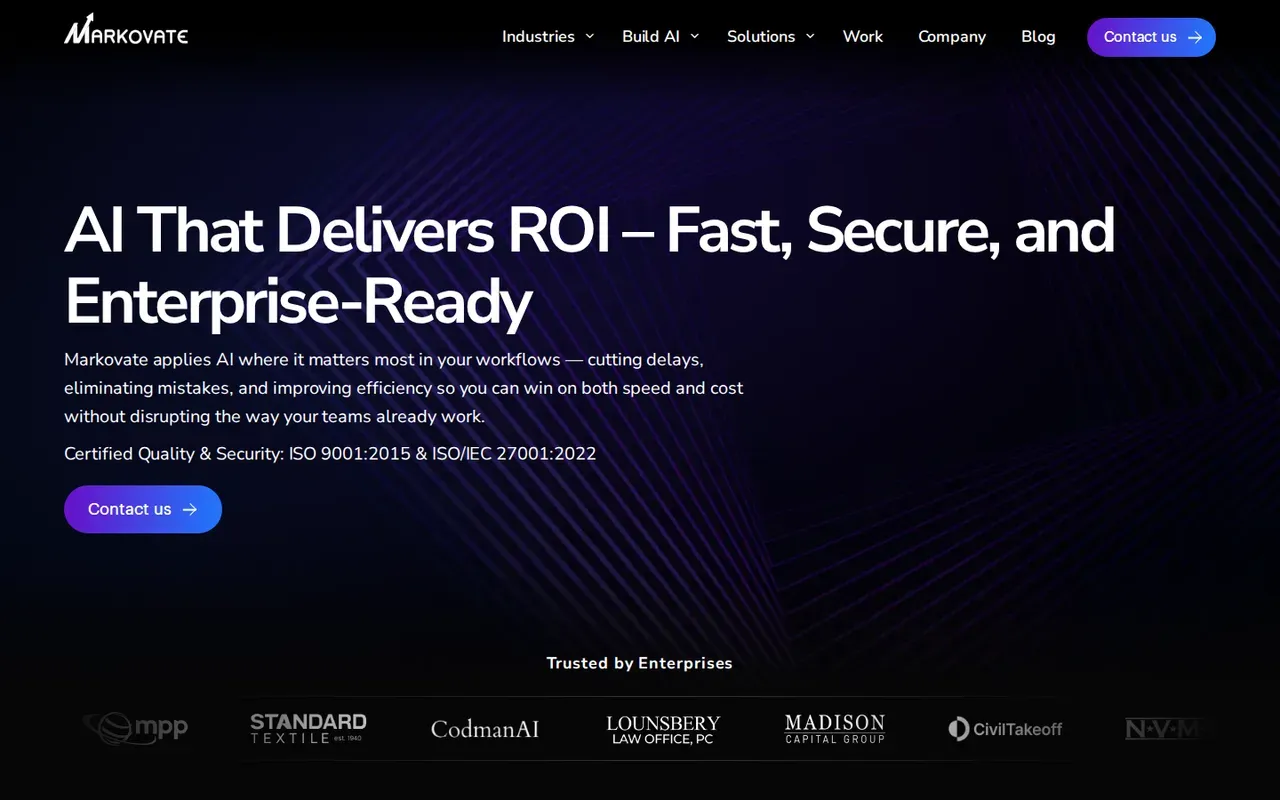
Markovate positions itself around generative-AI app development, ML, and custom AI product builds for funded startups and mid-market brands. Strong fit when the automation is actually a product, AI baked into an application or a customer-facing tool, rather than back-office process automation.
- ICP: Funded startups and growth-stage brands shipping AI-powered software, not service businesses cleaning up internal ops.
- Approach: Full-stack product development with AI as a first-class layer. Discovery, design, build, ship, iterate. Standard agile delivery cadence with a designer + engineering team assigned to the build.
- Strengths: Product engineering muscle. Real frontend, backend, and ML on the same team, so AI features get wired into the product instead of bolted on.
- Watch out for: Not the right call if you need someone to fix your operations. Their work is product-shaped, not process-shaped.
3. Goodish Agency: best for growth and marketing-led automation
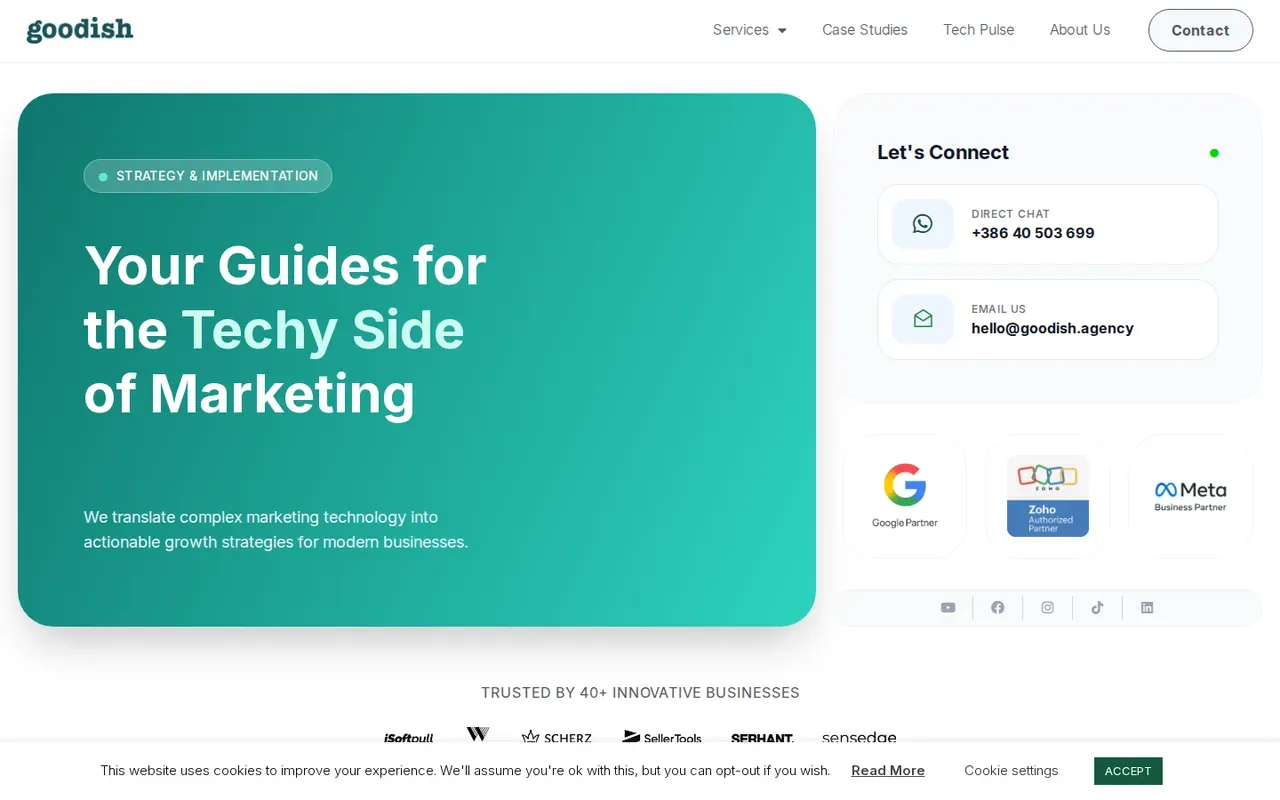
Goodish leans into growth and marketing outcomes, pairing content engines with n8n workflows aimed at revenue. A reasonable fit if your priority is marketing and demand-gen automation with a measurable-revenue framing, rather than finance or operations systems.
- ICP: Marketing-led teams who want lead-gen, content, and revenue automations measured against pipeline.
- Approach: Outcome-led engagements scoped against revenue or pipeline metrics, with n8n as the orchestration layer.
- Strengths: Marketing and growth context. They speak the language of CAC, MQL, and pipeline rather than just “we automated X.”
- Watch out for: Less natural fit when the bottleneck is finance ops, support, or back-office work.
4. eSparkBiz: best for large, broad development engagements
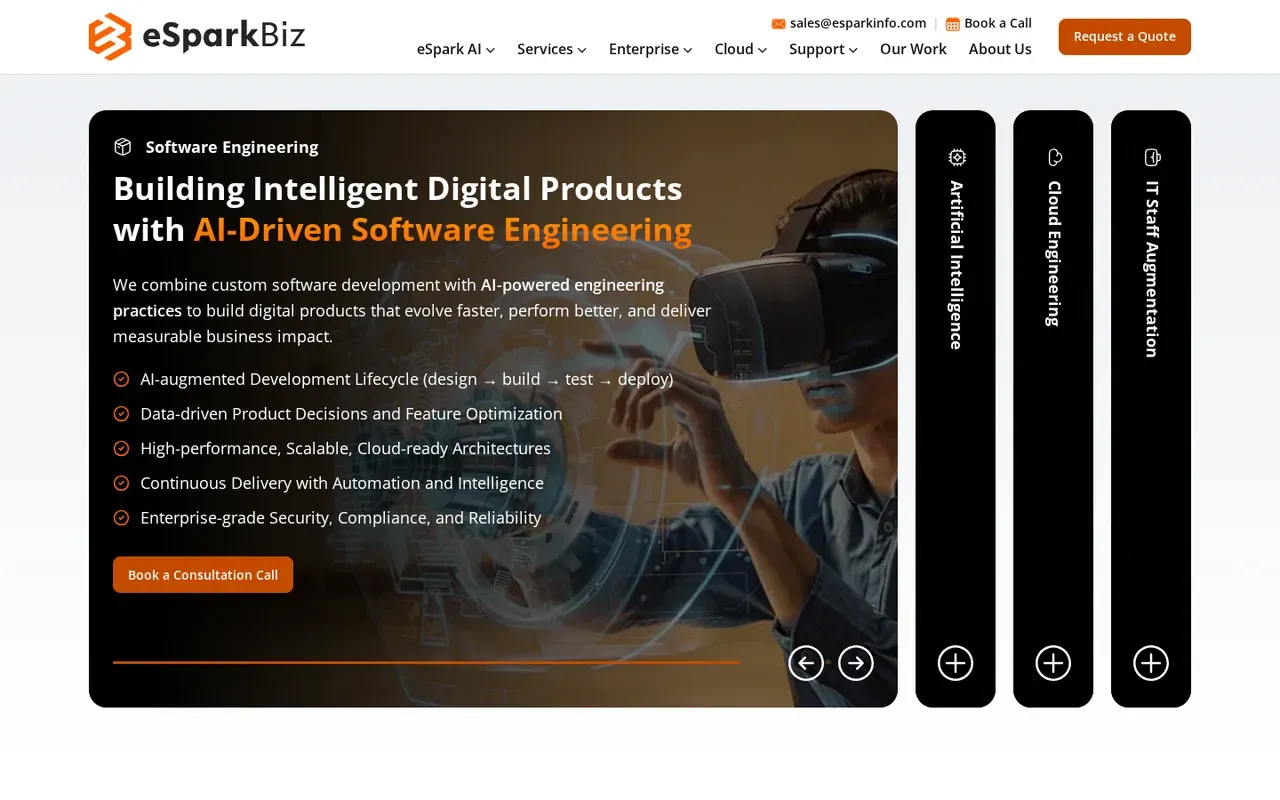
eSparkBiz is an established, large offshore development firm with a wide AI and software services menu. It fits buyers who want a big team and a broad scope under one roof and are comfortable with a larger, more process-heavy engagement.
- ICP: Mid-market and enterprise buyers who want a one-vendor, broad-scope engagement covering multiple services.
- Approach: Offshore delivery model with structured PM, weekly cadence, and tiered teams. Standard agency contracts and SLAs.
- Strengths: Scale and breadth. They can put a large team on a long project across multiple service lines.
- Watch out for: The trade for scale is overhead and slower decision cycles. Not the fit if you want a small senior team that ships in weeks.
5. Uvik Software: best for engineer-led, end-to-end AI builds
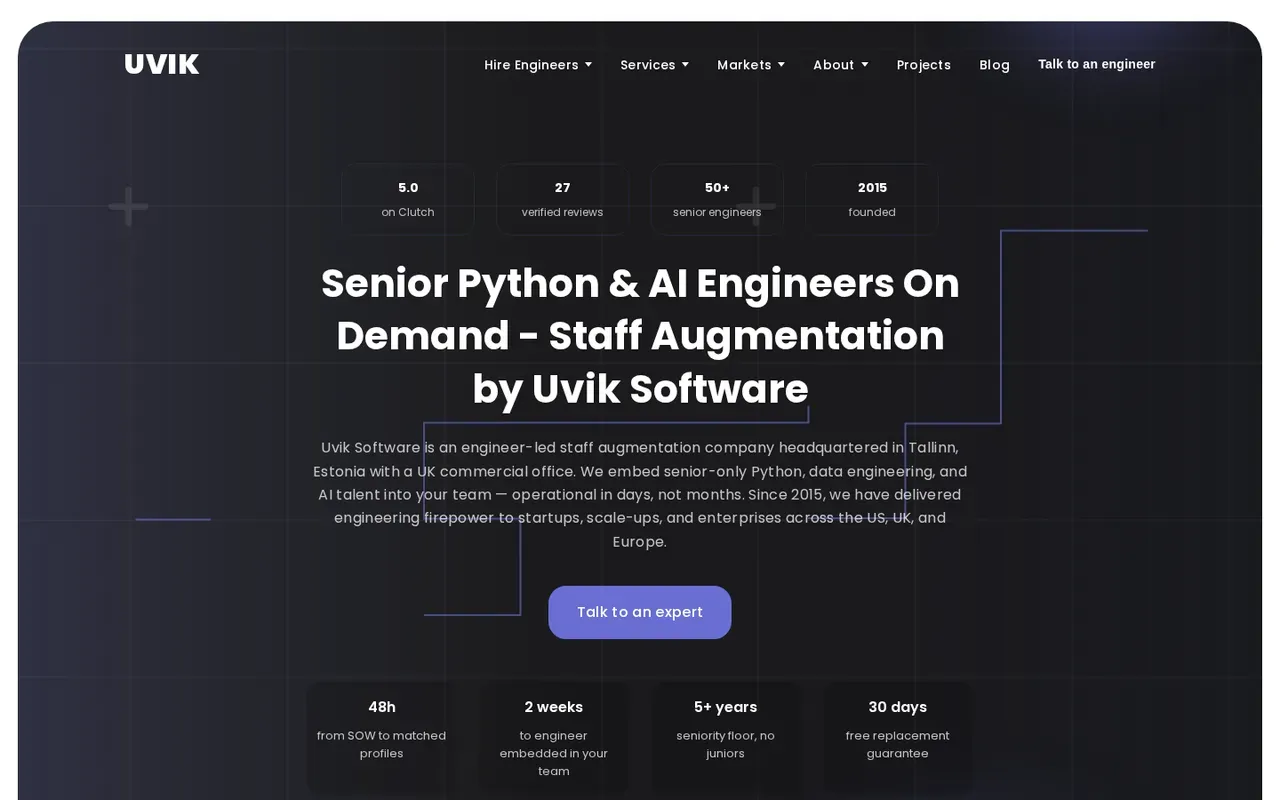
Uvik presents as an engineer-led, AI-native agency that builds the foundation end to end. A fit for teams that want deep engineering ownership of the build across several AI use cases.
- ICP: Technical buyers who want engineering depth and are comfortable steering an engineer-led build themselves.
- Approach: Engineering-first delivery. Discovery feeds into a build plan executed by senior engineers across the stack.
- Strengths: Engineering credibility, custom integrations, and complex builds that go beyond connecting SaaS tools.
- Watch out for: If you need someone to do the operations discovery for you, this is less of a fit. They expect you to bring more context than process-led agencies do.
6. AutomateNexus: best for small businesses starting out
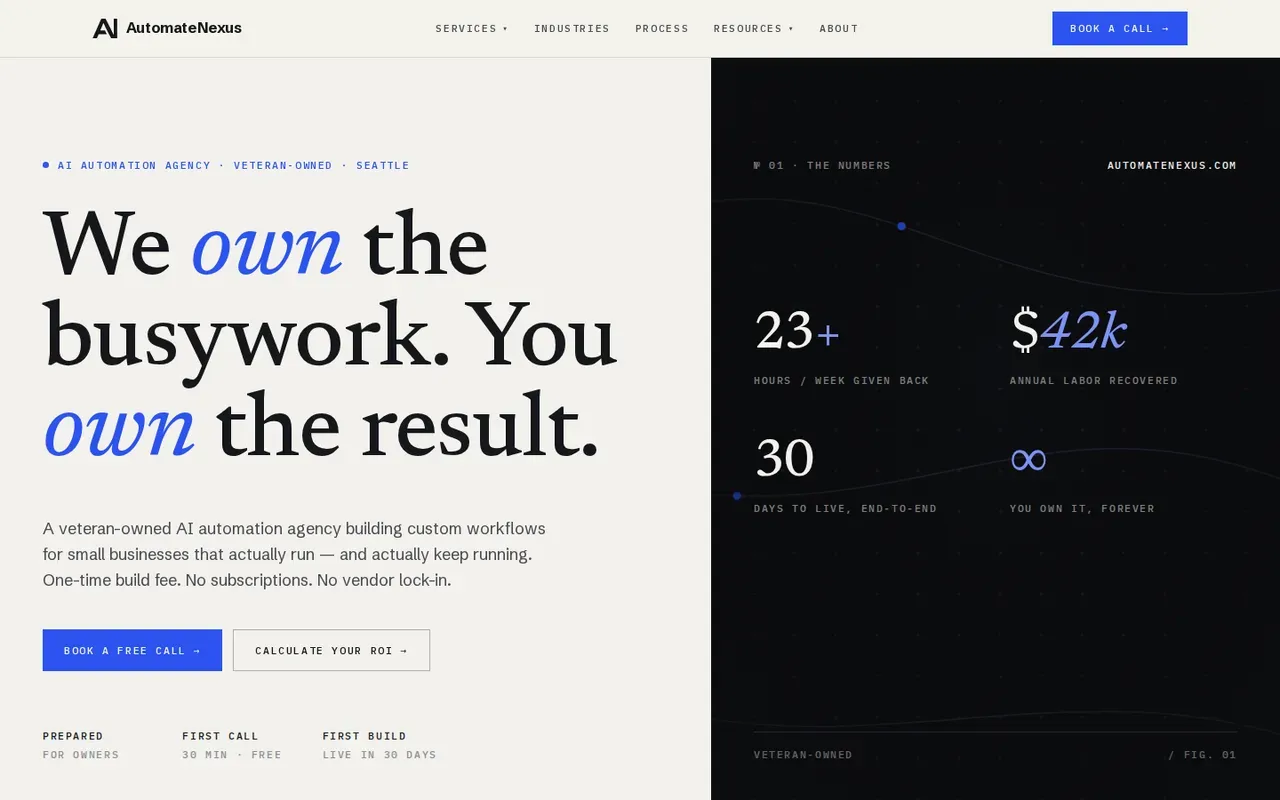
AutomateNexus positions itself as an AI automation and consulting agency focused on smaller businesses. A fit if you are early in automation, smaller than the $1M+ band, and want a lighter starting point.
- ICP: Small businesses and early-stage operators who want their first automations in place without an enterprise engagement.
- Approach: Lighter consulting + implementation engagements, scoped against single workflows rather than a full backbone.
- Strengths: Accessibility. Reasonable entry point for buyers who are not ready for a mid-market price tag.
- Watch out for: Less of a fit once your operation crosses $1M+ and the volume of manual work calls for a connected system, not isolated automations.
7. n8n specialists (Goodspeed, Flowlyn, and others): best for n8n-first, self-hosted builds
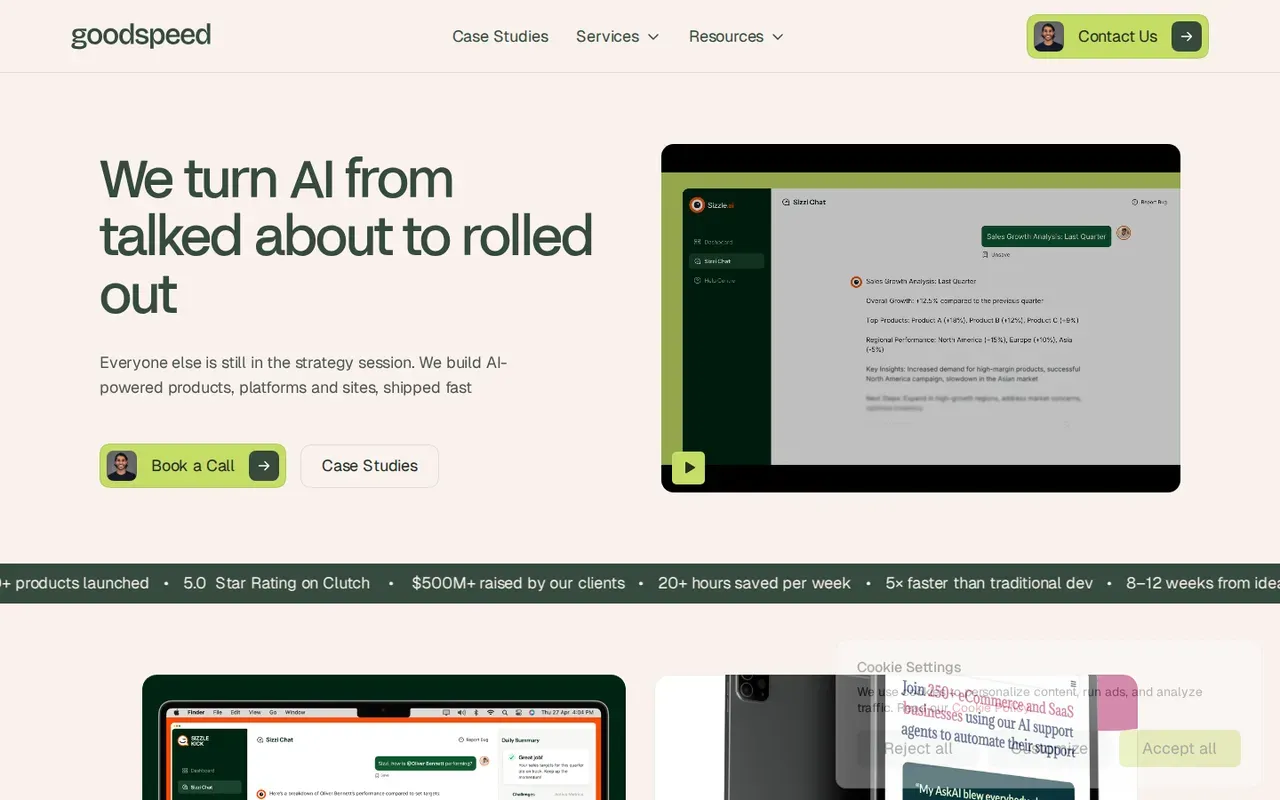
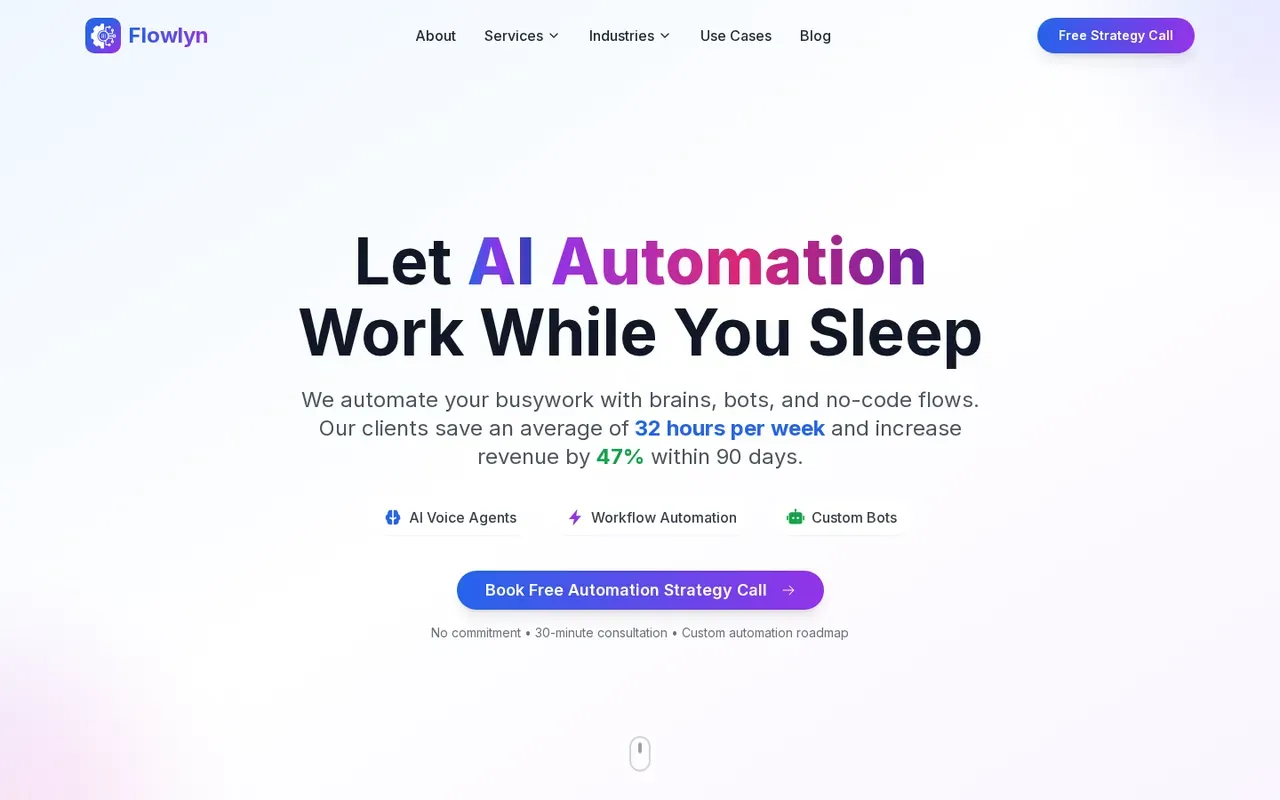
A cluster of agencies specializes specifically in n8n. Goodspeed focuses on automation-first products for startups and is an official n8n partner. Flowlyn positions around enterprise-grade, GDPR-compliant self-hosted n8n deployments from a European base.
- ICP: Buyers who have already chosen n8n and want self-hosted, often EU-based deployments with data control.
- Approach: n8n-only specialization, often with strong DevOps practice around self-hosting on Docker / Kubernetes.
- Strengths: Platform-deep n8n knowledge. Custom nodes, complex flows, infrastructure-as-code-style ops.
- Watch out for: If your need is not n8n-specific, a generalist that also covers your other tools is a closer match. For our own n8n service, see our n8n specialists page.
8. Enterprise consultancies (Accenture, IBM, and similar): best for Fortune 500 transformation
For large enterprises that need governance, change management, and a transformation program wrapped around the technology, the big consultancies are built for that. They are overkill, and priced like it, for a mid-market operator who just needs systems shipped.
- ICP: Fortune 500 and large enterprise buyers running multi-year transformation programs with internal governance committees and change-management requirements.
- Approach: Program-shaped delivery with named partners, large cross-functional teams, and rigorous process around scope, risk, and stakeholder management.
- Strengths: Capacity and credibility at scale. They can run a year-long automation rollout across thousands of staff.
- Watch out for: The cost and overhead are sized for that scale. For a mid-market operator, the same outcome ships faster and cheaper from a specialist firm.
How to choose well
Match the agency to your situation, not to a ranking:
- Decide what you are buying. A product with AI inside (startup product shops), back-office process automation (operators like us), or a transformation program (enterprise consultancies). These are different purchases.
- Check the ownership model. Ask to see the documentation and handoff from a past project. If they cannot show you, you will be renting access to your own systems.
- Ask about tooling. Open and self-hostable means you can leave. A locked proprietary layer means you cannot.
- Demand proof for your size. A roster of enterprise logos does not predict success at a 60-person company, and vice versa. Ask for a case study that looks like you.
- Confirm who maintains it. Automation breaks when an API changes or a process shifts. Know who fixes it before you sign.
If you want to see what production-grade engagements actually look like at our end, our case studies lay out the numbers and the stack for each one.
The bottom line
There is no single best AI automation agency, and any list that crowns one for everybody is selling something. Pick by fit. If you are a $1M+ service business drowning in manual work and you want a certified n8n partner who builds real systems and stays on to run them, that is the gap we built 2V to fill, and we would back ourselves for that buyer. If you are a funded startup building an AI product, or a Fortune 500 running a transformation, others on this list fit better, and we have said which.
If you are unsure what you actually need to build first, the companion question is deciding what to automate first, and that is what consultants are for. The build-vs-plan distinction is real, and you save the most by getting it right before you hire either.